
Imagine soaring above the clouds, controlling a modern jetliner, and exploring the world from the cockpit. For many, this is the ultimate dream job. However, airline pilot requirements are evolving quickly, making the journey more competitive and complex in 2025.
This guide will walk you through every key step, from education and licensing to medical exams and flight experience. Whether you are a student, a career changer, or an aviation enthusiast, you will find clear, current information here.
Discover what it truly takes to meet the latest airline pilot requirements, understand new industry standards, and get actionable advice to launch your aviation career with confidence.
Understanding the Basic Eligibility Criteria
Before you can pursue flight training, it’s essential to understand the core airline pilot requirements that set the foundation for your future career. These eligibility criteria combine regulatory standards, industry expectations, and practical considerations. Let’s break down each area to help you assess your readiness and plan your next steps.

Age and Educational Requirements
Meeting the minimum age and education levels is a crucial part of airline pilot requirements worldwide. Most jurisdictions require aspiring commercial pilots to be at least 18 to 23 years old, depending on local regulations. At a minimum, a high school diploma is necessary, but the trend is clear: major airlines increasingly prefer candidates with a bachelor’s degree, especially in STEM fields.
According to the Bureau of Labor Statistics, 80% of US airline pilots hold a four-year degree. Proficiency in English is also essential, as aviation operates in a global environment. International standards may vary, so always check region-specific FAA Pilot Certification Requirements before beginning your journey.
Citizenship and Language Proficiency
Airline pilot requirements often include citizenship or residency restrictions, especially if you plan to work for a national carrier. For example, the FAA, EASA, and ICAO each have specific rules regarding eligibility based on nationality and legal status.
English language proficiency is non-negotiable. The ICAO mandates a minimum Level 4 English certification, but many airlines require higher levels for operational safety. International applicants may face additional language tests, and some carriers demand advanced certifications to ensure clear in-flight communication. These standards help maintain safety and consistency across global operations.
Criminal Background and Legal Requirements
A spotless legal record is a critical part of airline pilot requirements. Regulatory bodies like the FAA, TSA, and EASA all require comprehensive background checks before issuing a license. Convictions related to drugs, alcohol, or violence, including DUIs, can result in disqualification or lengthy delays.
Drug and alcohol testing is strictly enforced, both during training and throughout a pilot’s career. Many airlines have a zero-tolerance policy, and failing a test can end your aviation ambitions. The impact of these background checks has become more pronounced, influencing hiring rates and shaping the industry’s reputation for safety and trust.
Physical and Psychological Attributes
Physical fitness and psychological stability are central to airline pilot requirements. Candidates must meet vision standards (often 20/20, with or without correction), pass hearing tests, and demonstrate overall health. Height and weight are also considered to ensure safe cockpit ergonomics.
Since the Germanwings incident, airlines are placing greater emphasis on psychological screening. Managing stress, decision-making under pressure, and emotional resilience are evaluated both during hiring and recurrent assessments. These measures help ensure pilots are prepared for the demands of modern aviation.
Step-by-Step Guide to Training and Certification
Becoming an airline pilot in 2025 requires a structured approach to meet all airline pilot requirements. Each step builds essential skills and fulfills strict regulatory standards. Below, we break down the journey, from your first solo flight to advanced airline certifications.
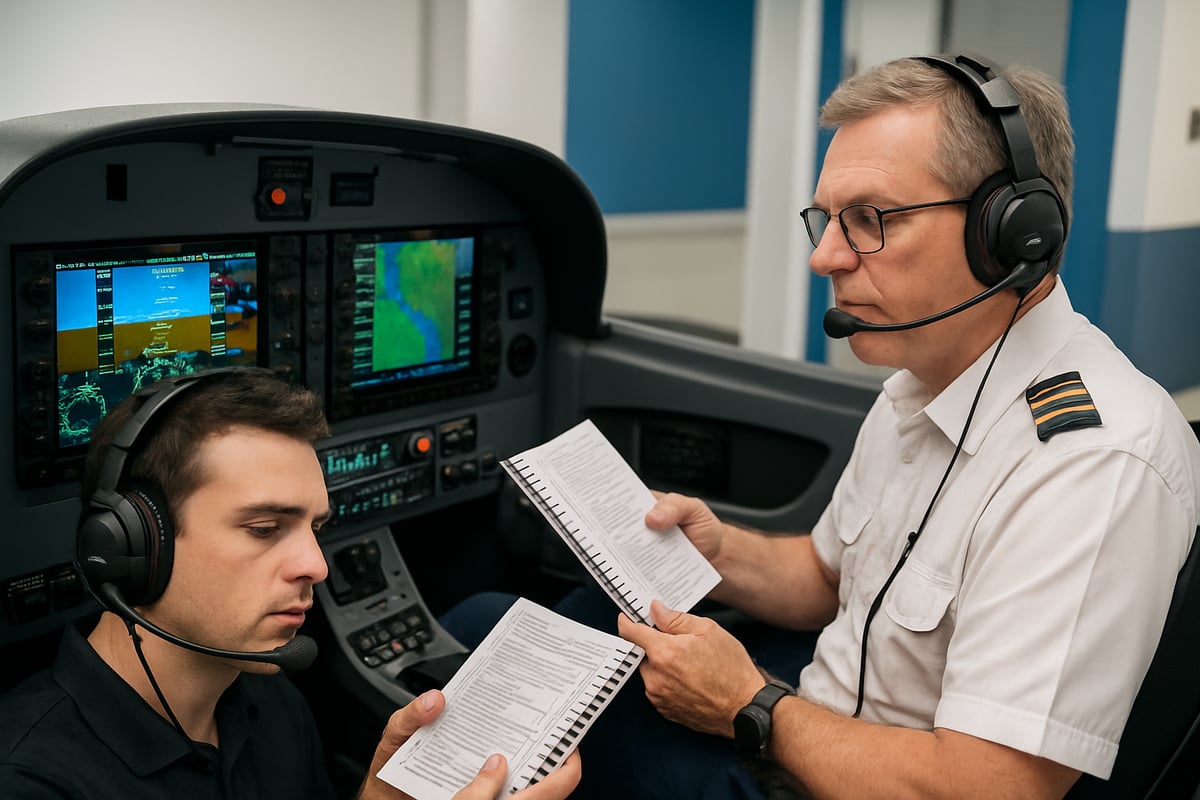
Private Pilot License (PPL)
The Private Pilot License is your first milestone in the airline pilot requirements pathway. Most aspiring pilots begin here, as the PPL lays the groundwork for all higher certifications.
To obtain a PPL, you need 40 to 60 flight hours, covering solo flights, navigation, and safety protocols. Training focuses on basic maneuvers, radio communication, and airspace rules. A strong foundation in these areas is critical for progressing toward commercial aviation.
About 90% of US airline pilots start their journey with a PPL, making it a universal starting point. This license allows you to fly single-engine aircraft but not for compensation.
Commercial Pilot License (CPL)
The CPL is the next step in meeting airline pilot requirements. It allows you to fly for hire and opens doors to professional aviation roles.
Earning a CPL usually requires 150 to 250 flight hours, depending on the regulatory authority. You will complete advanced maneuvers, cross-country flights, and night operations. Theoretical exams in subjects like meteorology and flight planning are mandatory.
A CPL is essential for anyone seeking paid flying opportunities. It is the baseline credential for charter, cargo, or regional airline positions.
Instrument Rating (IR)
An Instrument Rating is a crucial part of the airline pilot requirements, enabling pilots to operate safely in poor weather and low-visibility conditions.
The IR involves additional simulator and real-world training. You will learn to fly solely by reference to instruments, rather than visual cues. This skill is vital for airline operations, where flights often encounter challenging weather.
All airline pilots must have an Instrument Rating, and training emphasizes precision, navigation, and emergency procedures. The IR is often completed alongside or shortly after the CPL.
Multi-Engine Rating (MER)
The Multi-Engine Rating is necessary for aspiring airline pilots, as commercial jets have more than one engine. Meeting airline pilot requirements means learning to handle complex, multi-engine aircraft.
Training typically includes 10 to 20 hours in twin-engine planes. You will practice engine-out procedures, advanced systems management, and emergency scenarios.
The MER enhances your confidence and competence with more sophisticated aircraft, making you eligible for airline and charter jobs that require multi-engine proficiency.
Airline Transport Pilot License (ATPL)
The ATPL is the highest level in airline pilot requirements, mandatory for airline captains. Achieving this license demonstrates mastery of aeronautical knowledge and flight experience.
Requirements include being at least 23 years old (FAA), 1,500+ total flight hours, and passing comprehensive written and oral exams. In Europe, the EASA “frozen” ATPL allows co-pilots to operate until they gain the required hours as captain.
For a full overview of each certification step, see the Airline pilot certification process.
| License | Min. Age | Flight Hours | Key Skills |
|---|---|---|---|
| PPL | 17 | 40–60 | Basic airmanship, safety |
| CPL | 18–23 | 150–250+ | Advanced maneuvers, theory |
| ATPL | 23+ | 1,500+ | Leadership, systems, exams |
Type Ratings and Aircraft-Specific Training
Once you have an ATPL, meeting airline pilot requirements means earning a type rating for each specific aircraft you intend to fly, such as the Boeing 737 or Airbus A320.
Type rating courses involve intensive simulator sessions and check rides. You will master the aircraft’s systems, emergency procedures, and performance characteristics. US regulations require a new type rating for every jet you operate.
This step ensures pilots are fully prepared for the complexities of modern airline fleets.
Ongoing Training and Recurrent Checks
Airline pilot requirements do not end with initial certification. All airline pilots must undergo recurrent training every 6 to 12 months.
This ongoing process includes simulator-based proficiency checks, regulatory updates, and emergency drills. Training ensures pilots maintain high standards in safety and operational knowledge.
Recurrent checks are mandatory for compliance and career longevity, reinforcing the industry’s commitment to safety.
Meeting Medical and Psychological Standards
Becoming an airline pilot is not just about mastering flight skills. Meeting medical and psychological standards is a critical part of airline pilot requirements in 2025. These standards ensure the safety and wellbeing of both passengers and crew, and they have become more rigorous as the industry evolves.
Medical Certification Classes and Requirements
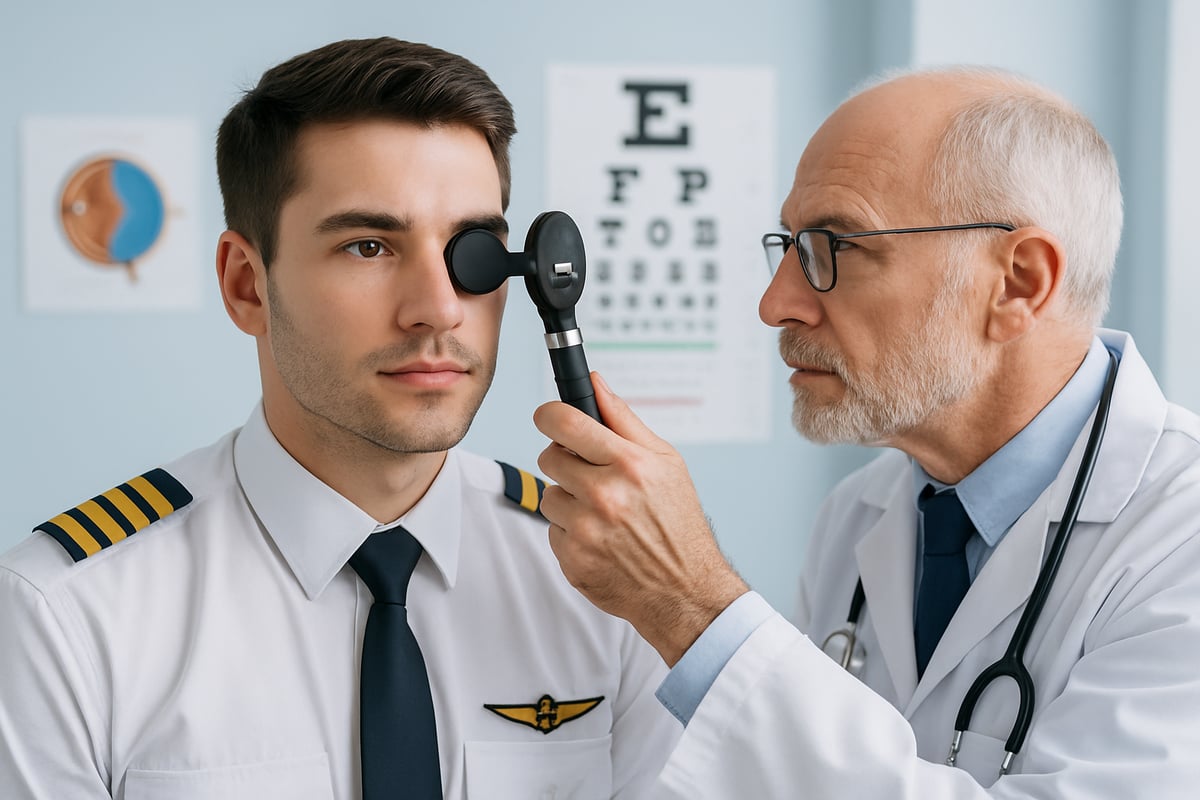
All aspiring pilots must obtain medical certification, a non-negotiable part of airline pilot requirements. Certificates are divided into three classes:
| Certificate Class | Purpose | Validity (Under 40/Over 40) |
|---|---|---|
| Class 1 | Airline transport pilots | 12 months / 6 months |
| Class 2 | Commercial pilots | 12 months |
| Class 3 | Private pilots | 24 months |
For airline pilots, a Class 1 certificate is mandatory and must be renewed regularly. Requirements include comprehensive physical exams and medical history checks. These criteria may vary slightly by jurisdiction, but all align closely with Commercial airline pilot training standards.
Vision, Hearing, and Physical Health Standards
Vision and hearing are essential for safe flight operations. Airline pilot requirements specify 20/20 vision, either naturally or corrected with glasses or contact lenses. Color vision must be sufficient to distinguish cockpit signals and runway lights.
Hearing tests ensure pilots can understand radio communications clearly. Physical health assessments focus on cardiovascular, neurological, and musculoskeletal systems. Any condition that could impair attention or quick response may disqualify a candidate.
Mental Health and Psychological Screening
Recent years have seen a heightened focus on psychological health as a key pillar of airline pilot requirements. Airlines now require psychological evaluations during both the hiring process and regular employment.
These screenings assess stress management, emotional stability, and decision-making abilities. Support programs and confidential counseling services are often available, reflecting the industry's commitment to mental wellbeing. After the Germanwings incident, protocols have become much stricter.
Drug and Alcohol Testing Policies
Strict drug and alcohol policies are core to airline pilot requirements worldwide. Before employment, pilots undergo comprehensive drug screenings.
Random testing continues throughout their careers, often at a rate of 25 percent annually in the US. Zero tolerance is enforced for any violations:
- Pre-employment screening
- Random, unannounced tests
- Immediate suspension for positive results
Consequences can include suspension, revocation of licenses, or permanent disqualification.
Medical Disqualifications and Appeals
Certain medical conditions automatically disqualify candidates under airline pilot requirements. Common examples include:
- Uncontrolled diabetes
- Epilepsy
- Severe psychiatric disorders
- Use of prohibited medications
However, some pilots regain eligibility through medical waivers if they can demonstrate safe management of their condition. An appeals process lets pilots present additional evidence, and many have successfully returned to duty after recovery, provided they meet all safety standards.
Flight Experience and Logbook Requirements
Building sufficient flight experience and maintaining a precise logbook are core airline pilot requirements. These elements prove a pilot’s skill, readiness, and regulatory compliance. Understanding how to meet these standards is essential for every aspiring airline pilot.
Minimum Flight Hours for Each License
Satisfying minimum flight hours is one of the most fundamental airline pilot requirements. To qualify for a Private Pilot License (PPL), you typically need 40–60 hours, including solo, cross-country, night, and instrument flight time. For a Commercial Pilot License (CPL), the requirement rises to 150–250+ hours. The highest level, Airline Transport Pilot License (ATPL), demands at least 1,500 hours under the FAA standard.
Here’s a summary table of these requirements:
| License | Minimum Total Hours | Key Experience Areas |
|---|---|---|
| PPL | 40–60 | Solo, cross-country, night, instrument |
| CPL | 150–250+ | Advanced maneuvers, night, cross-country |
| ATPL | 1,500+ | Multi-crew, jet time, advanced operations |
Some US regional airlines accept candidates with 1,000 hours under the restricted ATP route. For more on these requirements, review the FAA commercial pilot training requirements.
Simulator and Real-World Flight Training
Simulators play a critical role in fulfilling airline pilot requirements, especially for advanced training. Full-flight simulators replicate real cockpit environments, allowing pilots to practice complex scenarios safely. Regulatory authorities like the FAA and EASA permit up to 100 hours of simulator time to count toward ATPL experience totals.
Real-world flying remains essential. Simulators cannot fully replace in-aircraft learning, especially for developing judgment and handling unexpected situations. Balancing simulator and actual flight time is crucial for meeting both regulatory and airline pilot requirements.
Logbook Management and Verification
Accurate logbook management is a non-negotiable part of airline pilot requirements. Pilots may use traditional paper logbooks or modern electronic logbook systems. Regardless of format, every flight, simulator session, and ground lesson must be recorded with precision.
Airlines and regulators increasingly use digital verification tools to audit logbooks for completeness and consistency. Errors or discrepancies can delay hiring or licensing. Maintaining up-to-date, verifiable records is vital for a smooth airline pilot application process.
Building Experience: Flight Instructing, Charter, and Regional Jobs
Building the required hours often means working in a variety of aviation roles. Common pathways include flight instructing, banner towing, and flying for skydiving operations. Many pilots also gain experience with charter companies and regional airlines.
According to ALPA, 60% of US airline pilots start as flight instructors. These roles not only help meet airline pilot requirements but also develop teaching, leadership, and decision-making skills valued by employers.
International Considerations and License Conversions
For those seeking international careers, understanding how airline pilot requirements differ across regions is essential. ICAO licenses are widely recognized, but converting between FAA, EASA, and CASA licenses often requires extra exams and validation of flight hours.
Hour requirements and accepted experience types can vary. For example, EASA may not count all simulator hours that the FAA accepts. Pilots converting licenses must closely track their logbook entries to ensure compliance with the destination authority’s standards.
Navigating Regulatory Changes and Industry Trends in 2025
The aviation landscape is evolving quickly, and meeting airline pilot requirements in 2025 means staying ahead of key regulatory and industry trends. Aspiring pilots must understand not only the technical demands but also the broader forces shaping the profession. Let us explore what you need to know about the latest changes, diversity initiatives, technology advancements, and hiring projections.
Recent and Upcoming Regulatory Updates
Regulators are raising the bar for airline pilot requirements in 2025. Both the FAA and EASA are rolling out new exam formats for the ATPL, with an increased focus on scenario-based assessments and simulator testing. Medical fitness standards are also being strengthened, with more frequent checks and enhanced mental health protocols.
Globally, ICAO is working to align standards and streamline license recognition across regions. For those planning to fly in Europe, staying informed about EASA Flight Crew Licensing is crucial. These updates reflect a commitment to safety and quality in pilot certification.
Diversity, Equity, and Inclusion Initiatives
Airline pilot requirements are not just about technical skills. Airlines are expanding efforts to attract women and underrepresented groups into the cockpit. Scholarships, mentorship programs, and outreach to STEM students are now common.
Despite these efforts, women still make up only about 6 percent of airline pilots worldwide. However, new diversity initiatives are opening doors for a broader range of candidates. These changes are making the journey to meeting airline pilot requirements more accessible for all.
Technological Advancements in Training and Cockpit Operations
Technology is reshaping how pilots train and work. Virtual reality and augmented reality tools are now part of many flight schools, giving trainees realistic experiences before they ever leave the ground. Airlines are also using AI-powered analytics to tailor training to individual strengths and weaknesses.
Automation in the cockpit is increasing, but strong technical and decision-making skills remain a core part of airline pilot requirements. Staying current with these trends helps new pilots remain competitive in a rapidly changing industry.
Career Outlook and Hiring Projections
The demand for pilots is set to surge in the next 15 years. According to the Boeing Pilot and Technician Outlook 2025, more than 600,000 new pilots will be needed by 2040. This growth is driven by retirements and the launch of new airlines, especially in Asia and Latin America.
Regional airlines in the US and Europe are already seeing increased hiring needs. Meeting airline pilot requirements now puts you in a prime position to take advantage of this expanding job market.
Choosing the Right Flight Training Program
Selecting the ideal flight training program is a critical step in meeting airline pilot requirements. Your choice can shape your entire aviation career, affecting eligibility, training quality, and job prospects. With so many options available, understanding the key factors can help you make an informed decision that aligns with both current and future airline pilot requirements.
Accreditation and Regulatory Approval
Accreditation ensures your training program meets national and international airline pilot requirements. Look for schools approved by authorities such as the FAA, EASA, or ICAO, as these are recognized by airlines worldwide. Choosing a non-accredited school could jeopardize your eligibility for future airline pilot requirements or even prevent you from being hired.
For example, FAA Part 141 schools follow a structured curriculum and are regularly audited, while Part 61 schools offer more flexible, individualized instruction. However, many airlines prefer candidates from Part 141 programs due to their standardized approach.
If you want a deeper dive into prerequisites and the overall journey, the Becoming a commercial pilot guide provides valuable insights.
Curriculum, Facilities, and Simulator Access
A robust curriculum and modern facilities are essential to meet current airline pilot requirements. Top schools invest in advanced full-motion simulators, up-to-date aircraft, and digital learning tools. Access to a variety of aircraft types, including glass cockpit and multi-engine planes, prepares you for the demands of airline pilot requirements in 2025.
Evaluate the school's simulator fleet and classroom technology. The best programs integrate scenario-based training, allowing students to practice real-world emergencies and complex procedures. This hands-on experience not only builds confidence but also fulfills key components of airline pilot requirements.
Instructor Experience and Student Support
Experienced instructors play a pivotal role in helping you achieve airline pilot requirements. Look for programs staffed by current or former airline pilots, as they bring industry expertise and practical knowledge into the classroom. Strong mentorship and career guidance are crucial for navigating the complexities of airline pilot requirements.
Consider the level of student support offered. Top schools provide assistance with housing, visa applications, and job placement. These services can make the transition into training—and eventually into the airline workforce—smoother and more successful.
Cost, Financing, and Return on Investment
Understanding the financial commitment is vital when evaluating programs for airline pilot requirements. Training costs typically range from $70,000 to $150,000, depending on location, aircraft, and program length.
| Expense Category | Estimated Cost (USD) |
|---|---|
| Ground School | $5,000 – $10,000 |
| Flight Hours | $40,000 – $80,000 |
| Simulator Training | $10,000 – $20,000 |
| Exams & Materials | $5,000 – $10,000 |
| Miscellaneous | $10,000 – $30,000 |
Explore scholarships, student loans, and airline-sponsored programs to help offset expenses. Weigh the cost against starting salaries, long-term earning potential, and the stability offered by meeting airline pilot requirements. A well-chosen program is an investment in a rewarding, lifelong career.
You’ve seen how becoming an airline pilot in 2025 means meeting rigorous standards—education, licensing, medical checks, flight hours, and more. It’s a big commitment, but with the right training and support, you can turn your passion for aviation into a rewarding career. At Alliance Aviation, experienced instructors and FAA approved programs are designed to guide you through every step, whether you’re just starting or advancing your qualifications. Ready to take the next step toward the cockpit and join a global community of pilots?
Get Started