
Imagine yourself above the clouds, hands on the controls, and a world of possibilities beneath you. The dream to learn flying has never been more accessible or exciting as we move into 2025. Whether you crave adventure, personal growth, or a rewarding career, mastering the skies offers unparalleled freedom and achievement.
This guide is your step-by-step roadmap to learn flying, covering everything from understanding modern aviation to choosing the right training path. You will discover essential skills, the latest technology, and proven tips for success. Ready to take flight? Your journey to the sky starts here.
The Modern Aviation Landscape in 2025
Aviation in 2025 is more dynamic and accessible than ever before. If you are ready to learn flying, you will find a landscape shaped by innovation, evolving regulations, and a renewed spirit of exploration. The journey to the cockpit has become smoother, with recent changes making it easier for aspiring pilots to take flight.
Regulatory authorities, including the FAA and international bodies, have introduced significant updates to streamline and clarify the path to pilot certification. In December 2024, new FAA rules simplified flight training requirements, reducing administrative barriers and enhancing safety standards. For a deeper look at these changes, check out the FAA Updates Flight Training Rules which detail how these adjustments benefit both students and instructors.
The demand for pilots continues to surge. According to recent industry projections, airlines and charter operators face a global pilot shortage, driving up opportunities for those who learn flying. Consider these statistics:
| Year | New Student Pilot Certificates | Projected Pilot Shortage |
|---|---|---|
| 2022 | 57,000 | 17,000 |
| 2023 | 62,000 | 19,500 |
| 2024 | 70,000 | 22,000 |
Advances in aircraft technology are transforming the training environment. Many flight schools now feature electric and hybrid training aircraft, reducing noise and emissions. Modern cockpits are equipped with glass avionics, digital displays, and enhanced safety systems, making it easier and safer to learn flying with up-to-date tools.
Accessibility has never been greater. There are more flight schools, flexible financing options, and a growing number of scholarships for aspiring aviators. Here is what makes it easier to start:
- Expanded flight school networks in urban and rural areas
- Student loan and grant programs tailored for aviation
- Scholarships focused on underrepresented groups
Diversity and inclusion are becoming central to aviation communities. Programs encourage women, minorities, and veterans to learn flying, creating a richer and more supportive environment for everyone.
The global recovery from the pandemic has also influenced the industry. Training programs have adapted with hybrid learning models, and travel demand is rebounding, making now an ideal time to pursue your aviation dreams.
One standout example: The number of student pilot certificates issued in the last three years has grown by over 20 percent. This surge reflects both the increased interest and the improved ability for people from all backgrounds to learn flying in 2025.

Choosing Your Flight Training Path
Embarking on your journey to learn flying begins with a crucial decision: selecting the training path that aligns with your ambitions, lifestyle, and resources. Whether you dream of recreational flights on weekends or envision a commercial aviation career, understanding your options is the first step toward success.
Types of Pilot Licenses
The most common entry point is the Private Pilot License (PPL), which allows you to fly for personal enjoyment and travel. For those seeking a more streamlined and affordable introduction, the Sport Pilot License offers limited privileges but requires fewer flight hours. Aspiring professionals will ultimately target the Commercial Pilot License and, for airline careers, the Airline Transport Pilot (ATP) certificate. Each license sets different requirements for training hours, exams, and medical standards, so clarify your end goals before you learn flying.
Program Formats: Part-Time, Full-Time, or Accelerated
Training programs are available in various formats to fit your schedule and learning style. Part-time programs offer flexibility for those balancing work or school, while full-time options provide immersive learning and faster progress. Accelerated programs are designed for rapid advancement, often compressing months of training into weeks. As you learn flying, consider how much time you can dedicate and how quickly you wish to advance.
Traditional Flight Schools vs. University Aviation Programs
You can learn flying at a local flight school or enroll in a university aviation program. Traditional flight schools focus on practical instruction and are often more affordable and flexible. University programs may offer structured curriculums, degree pathways, and access to advanced resources. Both options can prepare you for professional or private flying, but university programs may be preferable for those seeking a college degree alongside pilot credentials.
Key Factors to Consider When You Learn Flying
When evaluating training options, prioritize FAA-approved or internationally recognized centers. Assess the school’s reputation, instructor experience, student success rates, and the quality and variety of training aircraft. Location, weather conditions, and community culture can also impact your learning experience. As you learn flying, these factors collectively shape your path to proficiency and safety.
Financing Your Training
Flight training is a significant investment. Explore scholarships, grants, and student loans specific to aviation. Many schools offer in-house financing or payment plans to help you manage costs. Researching and applying for financial aid early can make your goal to learn flying more accessible.
Comparison of Training Paths
Below is a quick comparison of the main training paths:
| License/Path | Typical Duration | Cost Range (USD) | Career Potential |
|---|---|---|---|
| Sport Pilot | 2-4 months | $6,000-$10,000 | Recreational only |
| Private Pilot (PPL) | 3-6 months | $10,000-$18,000 | Personal, some commercial use |
| Commercial Pilot | 6-12 months | $30,000-$80,000 | Professional pilot roles |
| ATP | 1-2 years | $60,000-$120,000 | Airline/major carrier pilot |
If you are interested in professional aviation, the Commercial Airline Pilot Training Guide provides a comprehensive overview of the steps and requirements involved in advancing from student pilot to airline-ready.
Choosing your flight training path is a pivotal moment as you learn flying. Take time to research, ask questions, and connect with current students or pilots. With careful planning and informed decisions, you will set yourself up for a rewarding journey in aviation.

Step-by-Step Guide: Learning to Fly in 2025
Embarking on your journey to learn flying in 2025 is an exciting, structured process. By following each step carefully, you will build the foundation to become a confident, safe pilot. Let us walk through the essential stages, ensuring you understand the requirements, training, and milestones ahead.
Step 1: Meet Eligibility and Medical Requirements
Before you can learn flying, confirm you meet the basic eligibility criteria. The minimum age for a student pilot certificate is 16, and you must be able to read, speak, write, and understand English.
A key requirement is obtaining an aviation medical certificate. There are three classes, each with varying standards depending on your goals. Most student pilots start with a third-class medical, suitable for private pilot training. In recent years, BasicMed has provided an alternative for many, easing access for recreational pilots.
To schedule your exam, locate an FAA-designated Aviation Medical Examiner (AME). Prepare by reviewing your health history and bringing any required documents. The process typically includes vision, hearing, and general health checks. Passing this step is your gateway to begin formal flight training and continue your learn flying journey.
Step 2: Ground School and Theoretical Knowledge
Ground school is where you build the knowledge foundation to learn flying safely and confidently. The curriculum covers aerodynamics, aircraft systems, navigation, weather, and aviation regulations.
You can choose between in-person classes at your flight school or flexible online programs. Many students prefer online options for their convenience, but some benefit from direct instructor interaction.
Preparation for the FAA written exam is crucial. Use study guides, online courses, and test prep apps to reinforce your learning. Recommended resources include the FAA Airman Knowledge Testing Supplement and the Gleim or ASA prep books.
A typical study plan involves daily review sessions, practice quizzes, and group discussions. This thorough approach ensures you are ready for both the written exam and real-world flying situations as you advance your learn flying adventure.
Step 3: Flight Training and Instruction
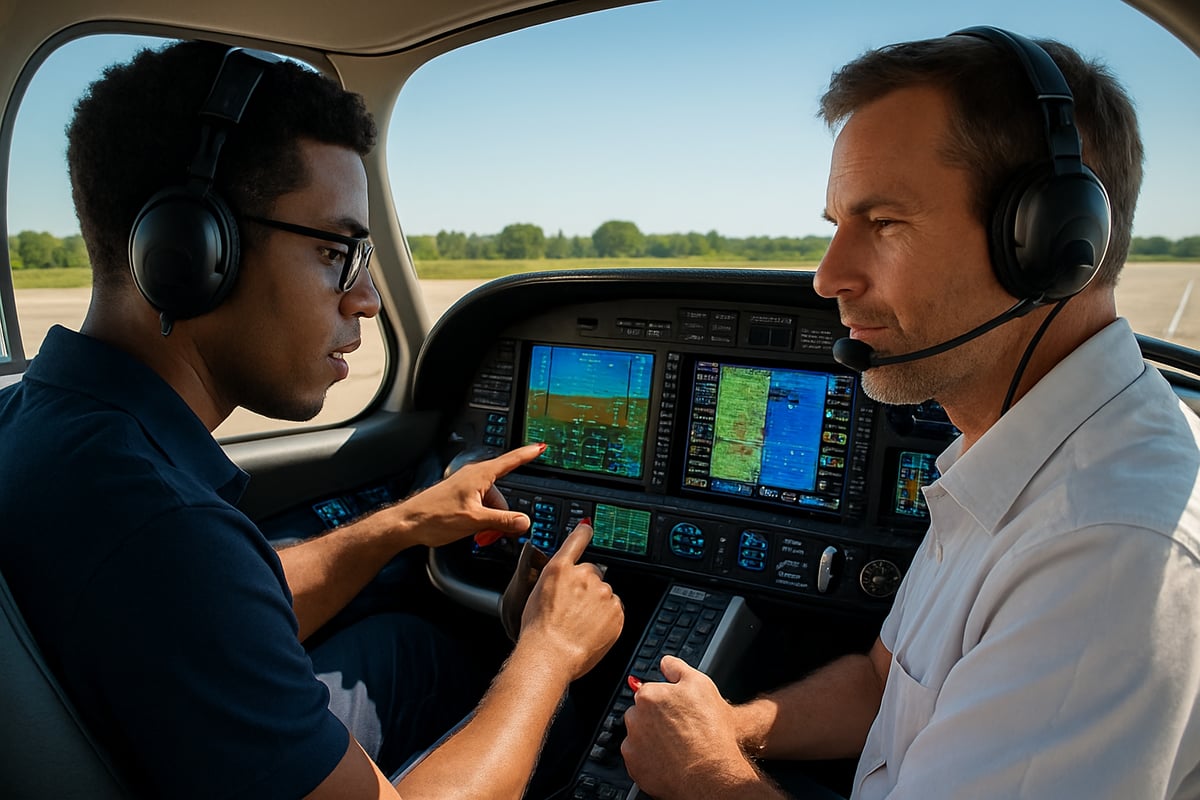
Now, you will experience the excitement of hands-on flying. Your first lesson often starts with an introductory flight, giving you a feel for the controls and environment.
Dual instruction, where you fly with a certified instructor, forms the core of your early training. You will practice basic maneuvers, takeoffs, landings, and emergency procedures. Your instructor will guide you through every stage, ensuring you understand each concept before progressing.
As you gain confidence, you will reach the milestone of your first solo flight. This is a significant achievement in your learn flying path. To solo, you must meet minimum flight hour requirements and demonstrate safe handling of the aircraft.
Throughout training, you will log every flight in a pilot logbook. This record is essential for tracking your progress and meeting FAA requirements. A typical lesson structure includes a preflight briefing, hands-on flying, and a post-flight debrief to review performance and set goals for your next session.
Step 4: Passing the Written and Practical Exams
To earn your pilot certificate, you must pass two key exams. The first is the FAA knowledge test, a computer-based multiple-choice exam covering all ground school topics. Use practice tests and flashcards to reinforce your understanding as you learn flying.
Next is the checkride, or practical test, conducted by an FAA examiner. The checkride includes an oral exam and an in-flight assessment. You will be evaluated on your ability to plan flights, perform maneuvers, and respond to emergencies.
Common pitfalls include inadequate preparation and nervousness during the checkride. To avoid these, practice with your instructor, review FAA standards, and simulate exam scenarios. Most students require 60–75 hours of flight time before feeling ready. Success rates are high for those who follow a structured study plan and commit to regular practice.
Step 5: Building Experience and Advanced Ratings
After earning your initial certificate, the next stage in your learn flying journey involves building experience and pursuing advanced ratings. This step is vital for those aiming for commercial or airline careers.
Time-building can be achieved by renting aircraft, joining flying clubs, or sharing flights with fellow pilots. These activities help you accumulate the required hours for higher licenses.
Advanced ratings include instrument (IFR), multi-engine, and commercial certifications. Each adds new skills and responsibilities, broadening your opportunities. For example, instrument training enables you to fly in low-visibility conditions, while the commercial rating allows you to be compensated for flying.
To understand the full pathway from private pilot to airline transport pilot, refer to the FAA Commercial Pilot Training Overview. This resource outlines the steps and requirements for each stage.
Typical requirements for commercial certification include 250 total flight hours, night flying, and cross-country experience. Many pilots participate in mentorship or time-building programs to reach these milestones efficiently.
Step 6: Staying Current and Safe
Learning to fly is just the beginning. To maintain your skills and legal privileges, you must stay current. The FAA requires pilots to complete a flight review every 24 months, which includes at least one hour of ground and one hour of flight instruction.
Ongoing education is highly encouraged. Attend safety seminars, participate in recurrent training, and stay informed about regulatory updates. Many pilots join online communities and local clubs to share experiences and keep skills sharp.
Proficiency is maintained through regular practice, reviewing emergency procedures, and updating your knowledge of airspace and technology. As you continue to learn flying, make safety your top priority. Staying current ensures you can enjoy the freedom of flight for years to come.
Essential Skills and Habits for Safe Piloting
Mastering the skies safely requires more than technical know-how. To truly learn flying, you must develop a set of essential skills and habits that set exceptional pilots apart. These qualities form the backbone of safe and confident flight, guiding you through every phase of your aviation journey.

Situational Awareness and Decision-Making
Situational awareness is the foundation of safe piloting. As you learn flying, staying alert to your environment, aircraft status, and airspace dynamics helps prevent dangerous surprises. This means constantly scanning your instruments, monitoring weather, and anticipating traffic.
Decision-making is equally vital. Pilots must assess risks, weigh alternatives, and act decisively. Practicing good judgment, especially under pressure, can mean the difference between a routine flight and a critical incident. Strong habits, such as using checklists and reviewing emergency procedures, support sound decisions.
Communication, Teamwork, and Weather Skills
Effective communication is essential in aviation. When you learn flying, you’ll discover clear radio calls prevent misunderstandings with air traffic control and other pilots. Teamwork in the cockpit, whether flying with an instructor or crew, ensures tasks are shared and errors are caught early.
Understanding weather is another core skill. Pilots must interpret forecasts, recognize changing conditions, and make proactive choices. This includes reading METARs, TAFs, and using onboard weather tools to stay ahead of storms or turbulence. Developing these skills enhances safety and confidence in the air.
Emergency Preparedness and Flight Planning
Preparedness for emergencies is non-negotiable. If you learn flying, rehearsing engine failures, system malfunctions, and abnormal situations builds muscle memory for quick, calm responses. Practicing simulated emergencies with instructors helps you react appropriately if real problems arise.
Thorough flight planning is a habit of safe pilots. Reviewing routes, fuel requirements, alternates, and airspace restrictions minimizes surprises. Time management—arriving early, briefing thoroughly, and anticipating delays—keeps flights on track and reduces stress.
Lessons from Real-World Scenarios
Experience teaches that good habits save lives. For example, pilots who consistently review weather before each flight are less likely to encounter hazardous conditions. According to the FAA, pilot error remains a leading cause of general aviation accidents, but those who prioritize continuous learning dramatically reduce their risk.
Real-world stories highlight the impact of discipline and preparation. Many pilots credit their focus on fundamentals for avoiding accidents and handling in-flight challenges smoothly. To stay current on best practices, explore Pilot Training Trends 2025 for insights into evolving safety standards and training methods.
Embracing Aviation Technology and Trends
Aviation is evolving at a rapid pace, and those who learn flying in 2025 will find an industry transformed by innovation. From the cockpit to the hangar, new technology is shaping how pilots train, fly, and stay safe. Embracing these trends can make your journey to pilot certification smoother, smarter, and more enjoyable.
Latest Cockpit Technologies
When you learn flying today, you step into cockpits equipped with advanced avionics. Glass cockpits replace traditional instruments with interactive displays, providing real-time data for navigation and system monitoring. Autopilot and ADS-B systems enhance situational awareness, while Electronic Flight Bags (EFBs) deliver charts and weather updates to tablets in the cockpit.
The FAA has recognized these advancements and introduced new regulations, such as FAA's New Rule on Powered-Lift Aircraft, to address emerging technologies. These changes ensure that training keeps pace with the latest innovations, preparing pilots for the modern aviation environment.
Electric and Hybrid Aircraft
Flight schools are rapidly integrating electric and hybrid aircraft into their fleets. These aircraft offer quieter operations, lower emissions, and reduced maintenance costs. For students who learn flying, this means more accessible and environmentally friendly training options.
According to recent industry data, the percentage of training aircraft that are electric or hybrid continues to climb. Many schools now dedicate a portion of their fleet to sustainable aviation, giving students hands-on experience with the future of flight.
Apps, Digital Tools, and AI
Modern pilots rely on a suite of apps and digital tools for flight planning, weather analysis, and logbook management. When you learn flying in 2025, you will likely use platforms that integrate airspace maps, real-time weather, and flight tracking—all from your smartphone or tablet.
Artificial intelligence is reshaping pilot training, offering adaptive learning modules and real-time feedback during simulator sessions. These tools help students identify areas for improvement and accelerate skill development, making the learn flying experience more efficient.
Integration and Data
Flight schools are committed to integrating the latest technology into their curricula. Many now require proficiency with digital flight planning and glass cockpit systems as part of their core training. A growing number of training aircraft—over 70% in some regions—are equipped with modern avionics, ensuring that students graduate with relevant, real-world skills.
As you learn flying, staying current with technology will be essential for safety, efficiency, and career success. The future of aviation belongs to those who embrace these trends and continue to adapt as new innovations emerge.
Tips for Success: Mastering the Skies
Embarking on your journey to learn flying can seem daunting, but with the right mindset and strategies, you can reach new heights. Whether you dream of personal adventure or a professional cockpit, success begins with a clear plan and strong support.
Set Realistic Goals and Manage Expectations
Break your learn flying journey into achievable milestones. Focus on one step at a time, from passing your medical exam to logging your first solo flight. Celebrate every achievement, no matter how small.
Build a Support Network
Connect with mentors, instructors, and fellow students. Join aviation forums, clubs, or online communities to share experiences and advice. A strong network provides encouragement and guidance through challenges.
Overcome Common Challenges
Time, finances, and setbacks are part of the process. Use flexible scheduling options and explore scholarships or grants to ease financial pressure. When progress stalls, consider incorporating Flight Simulator Training Benefits to sharpen your skills and regain momentum.
Leverage Financial Resources
Research scholarships, grants, and financing programs early. Many organizations and flight schools offer support specifically for those who want to learn flying. Staying informed about new opportunities can make your dream more attainable.
Track Progress and Stay Motivated
Keep a logbook, set short-term goals, and recognize your growth. Visualizing your progress fuels motivation and keeps you moving forward, even during tough phases.
Average Time and Cost to Obtain a Private Pilot License in 2025
| Step | Average Time | Estimated Cost (USD) |
|---|---|---|
| Ground School | 2-3 months | $1,000 – $2,000 |
| Flight Training | 6-9 months | $8,000 – $14,000 |
| Total (PPL) | 8-12 months | $9,000 – $16,000 |
Pilot Success Story
Consider Sarah, who balanced a full-time job with her passion to learn flying. Through careful planning and support from her local aviation club, she earned her license in under a year. Her journey proves that determination and community make all the difference.
With clear goals, resourcefulness, and a positive outlook, you can master the skies. Remember, every pilot started as a beginner. Let your learn flying adventure inspire and empower you to soar.
You’ve seen how learning to fly in 2025 combines cutting edge technology, growing opportunities, and the excitement of mastering new skills. If you’re ready to take the next step—whether your goal is a rewarding career or experiencing the freedom of flight—Alliance Aviation’s experienced instructors and internationally recognized programs are here to support you. You don’t have to navigate this journey alone; let’s make your dream of flying a reality together. Start your path toward the cockpit today and discover where your ambition can take you.
Get Started